Vision and aging…

Vision problems usually don’t have any set age at which they tend to affect people. However, as you get older some problems are more likely to happen. It is important to understand what all of these issues are and to have them looked at properly by a doctor. Some of the most common vision problems in aging adults are as follows:

Presbyopia is a condition is characterized by difficulty in seeing close objects or small print in books. This usually occurs after the age of 40. This can be easily corrected with simple reading glasses.

Floaters are actually a relatively common thing. They are simply pots or specs that flow across your eyes. You are more likely to see these specs during the day or in a well-lit place. If they occur frequently it might be a sign of retinal detachment. If this is the case consult a doctor.

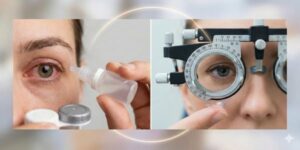
Dry eyes occur when you don’t produce enough tears or produce poor quality tears. This usually results in itchy eyes and rarely vision loss. This condition has varying degrees of seriousness. Depending on this degree they can be treated with using a humidifier, special eye drops, or tear duct surgery.

Tearing occurs when you have too many tears. This may occur from light sensitivity, wind, or drastic temperature changes. Simply shielding your eyes more can often cure this problem. However it might also be a symptom of an eye infection.

Cataracts are cloudy areas that sometimes develop on the corneas. They can sometimes impair vision. They form slowly and usually don’t cause any physical pain. Their removal requires surgery.

Glaucoma is a condition where this an excessive build up of fluid in the eyes. This can result in permanent vision loss. This buildup occurs slowly so it is important to have your eyes checked. This occurs when the normal flow of the fluid in the eyes is blocked. On rare occasion this could have resulted from injury to the eye, severe infection, and blockage of blood vessels. Treatment can range from eye drops, medication, and or surgery.

Retinal disorders sometimes occur when one is aging. These conditions include age-related macular degeneration, diabetic retinopathy, and retinal detachment. These conditions are treated best if caught early.

Conjunctivitis is a condition in which the skin of the eyelid that touches the eye becomes inflamed. This is commonly referred to as “pinkeye.”  It can cause itchiness and discomfort. It is highly contagious as well. It usually caused by infection or exposed to irritants and sometimes allergies.


Corneal diseases are also more likely. They can range from irritation, to the halo effect, and to vision loss. The treatments these types of symptoms are generally medicine or eye drops. Occasionally surgery may be needed.


Eyelid problems are characterized by pain, itching, and blinking spasms. They can generally be caught relatively early. These symptoms can generally be treated with medicine and surgery.


Temporal arteritis is a condition where the arteries in the temple become inflamed. This can cause pain in the face and jaw. If this persists it can often cause sudden blindness in one eye. Then fever like symptoms can occur and will follow with vision loss in the second eye. This needs immediate treatment. If you manage to catch it, medication can prevent the vision loss.


Again it is important to remember that these can occur at any age. They are simply more likely in old age.


What to expect in an eye exam

So you’re prepping for your eye exam? You probably haven’t been to the eye doctor in years and you’re wondering what to expect. Don’t worry, this article will cover some of the basics.

Well first of all you should know that eye exams vary depending on what you’re visiting the doctor for in the first place. For the sake of this article we’ll assume that you’re going for a general exam.

The doctor will run a series of tests designed to test not only the competency of your eyes but also for diseases that may show up in your eyes.

Here is a list of common eye tests that are administered during check-ups, along with a description of what the test is meant to accomplish:

  • Visual Acuity Test: This is usually the first test performed at the office. These tests are used to determine the sharpness of one’s vision. This is the infamous eye test where the doctor has you stare at a chart to determine how well you can see.
  • Color Blindness Test: As the name suggests this test is used as a determinant to see if, you guessed it, you’re colorblind. These tests also serve to alert the doctor if a possible illness if affecting your ability to see color.
  • Cover Test: Eye doctors use this test to see how well your eyes cooperate with one another. The doctor will have you staring at a small object across the room and then cover your eyes individually to determine how well each one works. This test is also used to see if you have a lazy eye condition.
  • Retinoscopy: This is where eye appointment gets especially fun. The doctor dims the lights in the room and has you stare at a lit object far away. Oh and I forgot to mention that you’re staring into a science fiction-like eye machine. Don’t be scared though, I’m sure that the doctor won’t steal your brain. He’s just checking your eyes to get a general measurement of your prescription.

Well there you have it. We’ve covered a lot of the basics of an eye exam and now you can prepare for your visit. Wait, actually there is no real way to prepare, but at least you know what to expect.


Taking Care of Your Eyes-Computers and Vision

If you spend excessive amounts of time on the computer like me then you’ve certainly wondered what kind of effects that this could have on your vision. Through dedicated research I’ve found that computers don’t actually cause any long-term harm to your eyesight. They can and will temporarily cause eyestrain however. In this article I’ll go over a few of the things that you can do to prevent eyestrain stemming from excessive computer usage.

To start off, and to many people this will seem like common sense, stop sitting so close to your computer. I know that it may seem like a good idea to have your screen 6 inches away from your face when you’re watching an episode of Lost on Hulu but it’s not. Keep it at least 20 inches away from your eyes.

Another good way to reduce the strain that computers have on your eyes is to keep the room well lit. Again, this may seem like common sense but you’d certainly be surprised at the number of people that sit in pitch black rooms and browse the internet. They’ll probably complain of aching eyes in the morning.

Now this is a tip that even I need to adhere to: Give yourself a break. Sure, you may be in the midst of a detailed report on scandals at Capitol Hill or you may be completing important payroll spreadsheets for work, but the fact remains that you and your eyes need a break. Try to take breaks at least every 45 minutes. And I’m not talking about those walk to Starbucks or watch television breaks; I’m talking 5 minute breaks that will give your eyes a rest. Every second that you spend on the computer is another second that your eyes are putting in every labor. Give your eyes some vacation time.

There you have it! Those are three easy tips to keep you browsing the internet in good visual health for years. It’s okay to break the rules every once in a while, but try to stick to them. But if you don’t, then you better not complain of eye pain the next day!

Sunglasses and Your Eyes

Do you wear sunglasses?  Of course they have their cosmetic uses but are you familiar with why they’re good for your eyes? They’re actually very good for protecting your eyes from harmful UV rays and keeping you from going blind. We’ll go over two of the most important factors to consider when purchasing sunglasses.

  • Comfort: The ideal sunglasses should be comfortable while on your face and fit snugly. I’ve seen people rocking those burly sunglasses that aren’t good for anything except making your face heavier. Keep those at home and buy some real sunglasses. We wouldn’t want you to have tan lines on your face.
  • UV Protection: This is the health benefit that I spoke of earlier. You should try to find sunglasses that will filter out 99-100% of the sun’s UV rays. This is optimal protection and will keep your eyes healthy.

Those are the two most important things to keep in mind when purchasing sunglasses. Sure, I love wearing the latest brands as much as the next person but you shouldn’t play around with your eyes. There is no use in buying sunglasses if you’re not purchasing them for their intended purpose.


Age-induced Eye Disorders

Inevitably, our bodies age and as they do essential functions that you once took for granted become an everyday struggle. This is the harsh reality of life. So we’ll be discussing some common eye disorders that usually accompany old age so that maybe you can work towards preventing them or value your eyesight even more right now.

  • Presbyopia: This odd word describes the gradual deterioration of your ability to read small text. People with this disorder are prone to headaches and tired eyes. If you buy a pair of good reading glasses this disorder should be manageable.
  • Floaters: This is the name for tiny specks that may cross your vision from time to time, usually on really bright circumstances. This disorder is normal in the aging process but should be further investigated by a doctor as it could be a sign of retinal detachment.
  • Tearing: Excessive tears usually stem from extreme sensitivity. Try wearing sunglasses or purchasing eye drops. If something seems out of whack be sure to contact a health professional so that they can make sure that you aren’t suffering from a more serious disorder.
  • Age-related Macular Degeneration: This disorder damages the sharp vision that you need to do simple tasks like drive or read. Doctors generally check for this disorder at check-ups.
  • Dry Eye: A medical condition where your tear glands don’t function as well. This disorder is common with aging and is more prevalent in women than men. There are various things that your healthcare professional could advise to help you with this problem. Artificial tears, special contact lenses, and humidifiers are just a few of the most common solutions.

Keeping your eyes healthy is vital to avoiding these disorders. But, as I mentioned earlier, some of them are just inevitable and the best thing that you can do is regularly visit an eye doctor to check the health of your eyes.

The Basics of Vision Therapy

Vision therapy is a customized set of visual activities designed to teach your eyesight to correct itself. Vision therapy should be thought of as physical therapy except for the visual system. Unlike contact lenses or eyeglasses, vision therapy actually aims to correct the underlying problem affecting the vision as opposed to temporarily remedying the problem. You may be wondering how exactly vision can be corrected just through therapeutic procedures; it’s definitely normal to be skeptical. Research has shown that repeated training and therapy can actually improve the way that your brain functions and outputs. Basically, these vision therapies target the brain’s inner functions and aim to tackle the problems from there. The phenomenon describing the ability of the brain to adapt is called neuroplasticity. Our bodies’ remarkable ability to adapt is the key concept behind vision therapy. Despite the promise of vision therapies you should be wary of any programs that promise instant vision cure. These programs are highly effective in some cases but no treatment is a definite cure and many programs will make false promises to lure in potential customers. If you are interested in vision therapies that could help you then you should consult with a doctor for a feasible option.

Importance of Safety Googles

I’ll just go right ahead and assume that you know what safety goggles are; if not, then do some quick research on them. What you may not be aware of however is the alarming frequency at which people neglect to wear them. Despite the ever present dangers in some situations, people don’t properly wear safety goggles.
These are just some of the most common causes behind eye injuries (And all of them could be prevented by the use of safety goggles):

  • Flying objects
  • Tools
  • Particles
  • Chemicals
  • Radiation

Generally, you should always use protective eyewear when there is a possibility of debris going near your eyes or when there is a sign that instructs you to wear protective eyewear. If you think hard enough then I’m sure you can remember a moment when you ignored a “Wear Safety Goggles” sign.
As goofy as they can sometimes look, safety goggles and the like are a necessity for preserving the health of one’s health. Too many accidents occur because of negligence on the part of the injured. In other words, wear protective eyewear whenever necessary or unsure. Maybe you’ll look like Dr. Jekyll, but at least you’ll be able to see.

Choosing your next pair of Glasses

Maybe you’ve finally come to the realization that you need eyeglasses after trying futilely toread a far-away sign or billboard. Or maybe you’ve always known that you need glasses and just feel like now is the perfect time to give them a test run. But, what attributes should you look for in eyeglasses? How do you know if you’ve found a great pair? We’ll be covering these questions and more. For the most part, choosing eyeglasses isn’t difficult at all. In fact, it is one of the easiest decisions that you will make in your life. Why? Because glasses are easily replaced and are not a permanent solution. After you’ve been properly measured by your doctor and have the prescription ready to go, it’s time to pick out your frames. Now I can’t stress this point enough: Try them on! Don’t just look at a pair and purchase them. You want to get the feel of the glasses, you will be wearing them for quite awhile. How do they feel? Do they feel like they’re about to fall off of your head? Maybe they’re extremely tight. Not to worry, your eye doctor’s office can do some tweaking and make those glasses fit you perfectly. Thus far, I’ve mostly told you how you really don’t have to do any work when choosing a pair of eyeglasses, so you must be wondering where the hard part comes in. I’m going to be quite frank;as long as you do some careful analysis of your frames, you should be fine. What I mean whenI say that is you have to make sure that the frames suit you, this is especially important if you’re only buying one pair of eyeglasses. Maybe you’ve found a great pair of frames to match something that you have. Of course you’re thinking that this is a great deal, until you get home and realize that they don’t match anything you own. You just bought a pair of glasses on a spur of the moment binge. You need to do some brainstorming. Are your glasses classy enough to wear to work? How about stylish enough to wear for a night on the town? You’ll find that the best glasses are versatile in those respects and allow a seamless transition between educated professional and fashion savvy ‘life of the party’.

1st month of vision development

A child’s vision develops pretty rapidly over the first few years of their life. Here’s a bit more on that first month of development. First of all, a child’s vision begins to develop before they even leave the wound. This is important to keep in mind because the way that a woman treats her body during pregnancy will drastically affect the health of her child and their vision. When first born, children are generally color blind. They can only see in shades of black, white,and grey. They also lack the ability to focus on close objects. Despite these facts, a few days after birth a baby will prefer the face of their mother to anyone else. Whilst still in the infancy stages, babies are very resistant to light. In fact, in order for a baby to recognize that light is even present requires about fifty times the normal amount needed foran adult. That being said, it’s okay to leave lights on in your baby’s room. Don’t worry about hurting their eyes. Within the first month, the infant will develop the ability to distinguish between other colors besides black and white. It’s also common at this stage for your child’s eyes to wander back and forth. This is because they haven’t learned to coordinate together yet. This issue shouldn’t be cause for concern unless the misalignment is severe. That about wraps up your baby’s first month of development. We’ll talk about later stages in the future.

Vision Development (continued)

In an earlier post we talked about the first month of a child’s vision development. Now, we’ll talk about the following five months until they’re six months old. As we discussed previously, babies grow at a rapid rate. Their vision development only continues to accelerate following the first month.
We talked about how their eyes weren’t yet coordinated. This should wear off between the two and three month period. They also learn how to move their eyes without shifting their heads. Once they reach the three month threshold, their eyes are only 10x more resistant to light than adults. It may be a good idea to start turning the lights down around bedtime. The American Optometric Association recommends a few tips to help keep your baby’s eyes healthy:

  • Start adding variety to the baby’s room.
  • Switch up some items and toys.
  • Start to talk to your baby as you walk around, allowing them to follow you with their eyes.
  • Keep a night light on in their room to provide additional visional stimulation.

At this age babies shouldn’t be placed on their stomachs due to the risk of Sudden Infant Death Syndrome but you can place them on their stomachs while you’re monitoring them carefully. This lets them develop some additional visual components. By the time they reach six months of age they’ve already experienced significant growth. Their eye acuity has increased to about 20/25 as opposed to 20/400 when they’re born. Children at six months of age can now see all of the colors on the spectrum. They also have great hand-eye coordination and can direct objects into their mouth easily. Be sure to take your baby to their first eye doctor visit at this age. The doctor will be able to spot any existing eye conditions and inform you of how you can continue to protect your baby’s vision.

« Previous PageNext Page »